Perfectly Imperfect: How Asymmetry and Natural Patterns Are Rewriting the Rules of Beauty
For a long time, the beauty industry handed us a very specific blueprint. Symmetrical features. Even skin tone. Pores? Invisible. Freckles? Covered. The ideal face was essentially a smoothed-out, algorithm-approved version of a human being — and most of us spent years (and a lot of money) chasing it.
But something has shifted. Slowly, then all at once, the cultural conversation around beauty in the US has started to sound a lot more honest. And interestingly, some of the most compelling inspiration for this new standard isn't coming from a runway or a Hollywood red carpet. It's coming from nature itself.
The Spotted Giraffe Didn't Get a Filter
Think about a giraffe for a second. No two have the same pattern. Their spots are irregular, asymmetrical, and utterly unique — and nobody looks at a giraffe and thinks it needs to be more uniform. We look at one and immediately recognize something beautiful about its individuality.
That's not a coincidence. It's actually how our brains are wired when we're not being told otherwise.
Research in evolutionary psychology suggests that humans are drawn to natural variation in ways that beauty marketing has long tried to override. We're conditioned, through advertising and social media, to associate uniformity with desirability. But strip that conditioning away, and what we actually find attractive is far more complex — and far more interesting — than a perfectly symmetrical face.
Conscious beauty brands are starting to build their entire ethos around this idea. The message isn't "embrace your flaws" (which, let's be honest, still frames natural features as something to tolerate). It's more like: your patterns are the point.
Why Symmetry Was Always a Myth
Here's a fun fact that beauty marketing has conveniently glossed over: no human face is actually symmetrical. Not a single one. If you split any face down the middle and mirror each half, you get two distinctly different-looking people. Our eyes sit at different heights. One brow arches a little more than the other. Our smiles pull slightly to one side.
For decades, this was treated as a problem to solve — with contouring, with strategic highlighting, with Instagram filters that quietly evened everything out before we even thought to question it. The beauty industry made billions off the idea that asymmetry was something to correct.
But neuroscientists and psychologists have been quietly pointing out for years that slight asymmetry is actually what makes faces feel alive and real to us. It signals authenticity. It's the difference between looking at a person and looking at a rendering of one.
Gen Z figured this out faster than anyone. The generation that grew up watching heavily filtered content is now the most vocal about rejecting it — and they're dragging the rest of the industry along with them.
Freckles, Texture, and the Patterns Worth Keeping
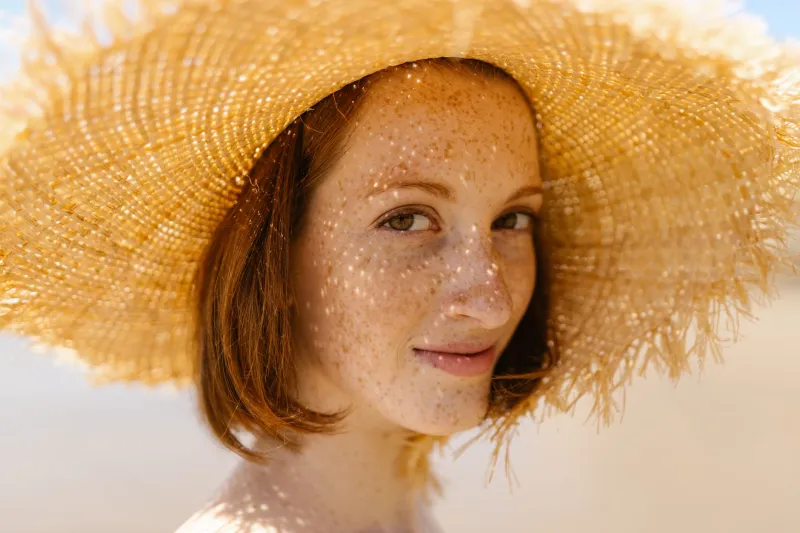
One of the clearest signs that beauty standards are genuinely evolving? The complete reversal of how we talk about freckles.
A decade ago, freckle-coverage was a foundation selling point. Today, brands are launching products specifically designed to enhance and preserve them. Some are even creating faux-freckle tools for people who want that look without the sun exposure. The feature that once sent people running to the concealer aisle is now something people are actively recreating.
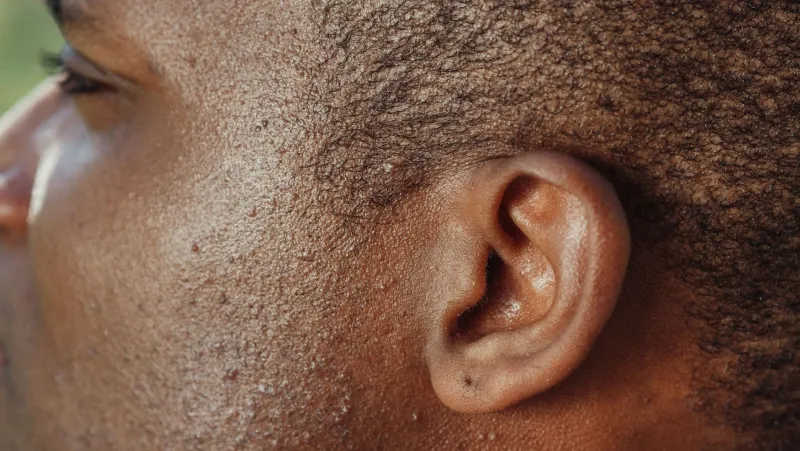
The same shift is happening with skin texture. The hyper-smoothing filters that dominated Instagram beauty for years are increasingly being called out as unrealistic — and frankly, a little creepy. Real skin has texture. It has pores. It has subtle variations in tone that shift depending on the light, the season, your hydration levels. That's not a flaw. That's biology.
Conscious beauty brands are leaning into this by rethinking what their products actually do. Instead of "correcting" texture, the most forward-thinking formulas now work with the skin's natural surface — supporting its barrier, evening tone without erasing it, and letting the skin's own character show through.
What This Means for How Brands Market to You
The shift in beauty standards isn't just a vibe — it has real implications for how products are developed and sold. And if you know what to look for, you can start to tell the difference between brands that are genuinely embracing this philosophy and those that are just co-opting the language of self-acceptance while still selling you "perfecting" serums.
Here are a few things worth paying attention to:
Campaign imagery. Are the models in a brand's ads showing actual skin variation? Or is every photo still smoothed to within an inch of its life in post-production? A brand that talks about celebrating natural beauty but shoots everything through a softening filter is telling you something important.
Product language. Words like "correcting," "perfecting," and "erasing" are holdovers from the old playbook. Brands that have genuinely shifted their thinking tend to use language around supporting, balancing, and enhancing — framing the skin as something to work with, not against.
Shade range and undertone diversity. A brand that truly celebrates natural variation should reflect that in how they approach color. Skin tone isn't a spectrum with two endpoints. It's a wildly complex, beautifully varied range — and products designed for conscious consumers should acknowledge that.
Celebrating What Makes You Unrepeatable
There's something quietly radical about deciding that the thing that makes you look like you — and not like anyone else — is actually your best feature. In a beauty culture that spent decades selling sameness, that reframe is genuinely significant.
The spotted giraffe doesn't wish its markings were more uniform. It doesn't stand next to another giraffe and feel like its pattern is wrong. Its spots are its signature — as unique as a fingerprint, and just as unrepeatable.
That's the energy more of us are bringing to our relationship with our own skin right now. Not "I'm learning to accept my imperfections," but "I'm done calling them imperfections in the first place."
Conscious beauty at its best isn't about lowering the bar. It's about changing what the bar is measuring. And right now, the most compelling standard in beauty isn't perfection — it's authenticity. It's the freckle that sits exactly where it always has. The brow that does its own thing. The skin that looks like it belongs to a living person, because it does.
Nature has always known this. We're just catching up.