Your Skin Has a Signature — It's Time Beauty Started Treating It That Way
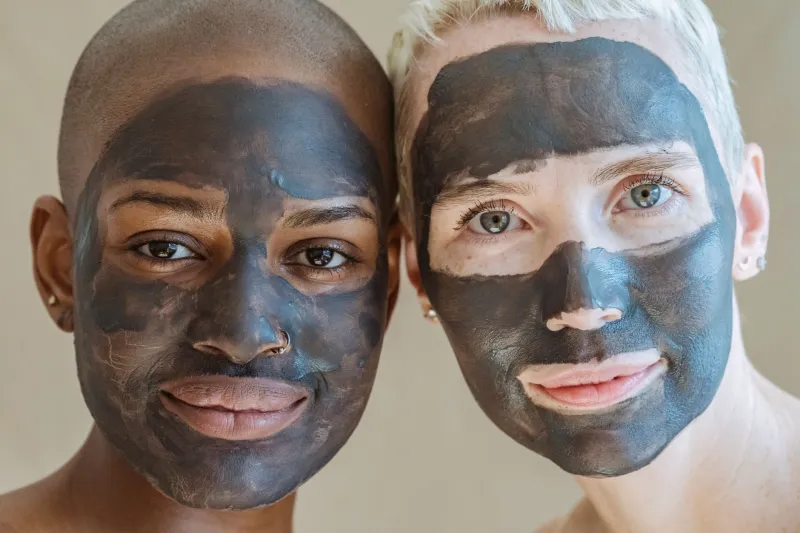
Think about a giraffe for a second. No two have the same pattern of spots. Each one is completely distinct — a biological fingerprint worn on the outside. It's bold, it's unapologetic, and it's entirely their own. Now think about your skin. The freckles that cluster near your temples. The dry patch that shows up every winter without fail. The way your T-zone has its own agenda regardless of what you put on it.
Your skin has a signature, too. And for a long time, the beauty industry has been trying to erase it.
But something is shifting. Slowly, then all at once, brands and consumers are waking up to the reality that skincare built around a mythical "universal" complexion was never serving most of us. The one-size-fits-all model — the 3-step system promising glowing results for everyone — is starting to feel as outdated as it actually is. In its place? A more honest, more personalized approach to skin that starts with a simple but radical premise: your skin is not a problem to be solved. It's a pattern to be understood.
Where the "Universal" Routine Went Wrong
The history of mass-market skincare in the US is largely a history of erasure. For decades, products were formulated with a narrow demographic in mind — typically lighter skin tones with specific concerns like fine lines or mild dryness — and then marketed to everyone as if melanin didn't exist, as if hormonal acne in your 30s was somehow an edge case, as if oily skin in humid climates was a personal failing.
This wasn't just a marketing problem. It was a formulation problem. Ingredients calibrated for one skin type can be actively irritating for another. Retinoids that work beautifully on drier skin can wreak havoc on sensitized or melanin-rich complexions if introduced too aggressively. Stripping cleansers sold as "deep clean" solutions often leave already-compromised skin barriers even more vulnerable.
The result? A lot of people spent a lot of money on routines that didn't work — and then blamed themselves for it.
The Pattern Shift Happening Right Now
Here's where things get interesting. A new generation of indie and clean beauty brands is doing something the industry hasn't historically been great at: listening. Instead of building a product and then finding an audience for it, they're starting with the audience — with real skin diversity, real concerns, and real variation — and working backward.
This shows up in a few different ways. Some brands are leaning hard into skin-type specificity, creating formulas explicitly designed for the intersection of concerns rather than just one. Think: oily and sensitive, or dry and hyperpigmentation-prone. Others are investing in broader shade ranges for tinted SPFs and foundations that actually account for undertone variation, not just depth of color.
There's also a quieter revolution happening in how brands talk about skin itself. The language is changing. Where "flawless" and "perfecting" used to dominate product copy, you're now seeing words like "balancing," "supporting," and — crucially — "honoring." It's a small linguistic shift with a big implication: your skin doesn't need to be fixed. It needs to be worked with.
What Personalized Skincare Actually Looks Like in Practice
Okay, so personalization sounds great in theory. But what does it actually mean when you're standing in the skincare aisle (or scrolling at 11pm, which, same)?
It starts with observation. Not judgment — observation. Spend a week or two noticing your skin without trying to immediately correct it. Where does it get dry? When does it break out, and what seems to trigger it? How does it react after you sweat, or after a stressful week, or after you eat a certain way? This kind of skin journaling sounds fussy but it's genuinely useful data.
From there, building a personalized routine is less about buying more products and more about buying smarter ones. A few principles that tend to hold up:
Anchor around your skin barrier. No matter your skin type, a compromised barrier is behind a lot of common complaints — sensitivity, breakouts, uneven texture, dullness. Products that support barrier function (think ceramides, fatty acids, gentle humectants like hyaluronic acid or glycerin) are almost universally useful, even if everything else in your routine is highly customized.
Layer concerns, don't cherry-pick them. If you have both hyperpigmentation and dehydration, you need to address both — not alternate between them. Look for formulas that multitask, or build a routine where each step is pulling its weight for your specific combination of needs.
Give things time, but not forever. Personalized doesn't mean permanent. Your skin changes with seasons, stress levels, age, and hormonal shifts. A routine that worked perfectly at 28 might need a full audit at 35. Check in with your skin the way you'd check in with a friend — regularly, and without assuming you already know the answer.
The Clean Beauty Connection
There's a reason the personalization movement and the clean beauty movement are running parallel tracks right now. Both are fundamentally about the same thing: respect. Respect for what goes into a product, where it comes from, and whether it's actually serving the person using it — not just performing wellness for the gram.
Clean beauty, at its best, is also more likely to produce formulas that work across a wider range of skin types. When you strip out unnecessary fillers, synthetic fragrances, and known irritants, what you're left with tends to be gentler and more adaptable. That's not a coincidence. It's what happens when you start with skin health as the goal rather than an afterthought.
At Sophie La Girafe Cosmetics, this is the thread that runs through everything we talk about. The giraffe doesn't apologize for its pattern. It doesn't try to blend in. And neither should your skincare routine.
The Takeaway
The most liberating thing the modern beauty conversation has offered us is permission — permission to stop chasing someone else's skin and start understanding your own. The brands worth your money are the ones that see your skin's individuality as a feature, not a bug. The routines worth your time are the ones built around your biology, not a marketing team's idea of universal appeal.
Your skin has a signature. Learn it. Respect it. Build around it. That's not a beauty trend — it's just good sense.