Spot On: Why Your Most Distinctive Features Are Actually Your Greatest Beauty Assets
There's a reason Sophie La Girafe has been one of the most recognized figures in children's culture for over sixty years. It's not in spite of those bold, irregular spots — it's entirely because of them. Strip away the pattern, and she's just another toy. Keep the spots, and she becomes iconic.
Beauty culture is finally catching up to what that little giraffe has always known: distinctiveness isn't a flaw to manage. It's a signature to protect.
The Homogenization Problem We're Just Now Naming
For a long time, mainstream beauty operated on a subtraction model. Got freckles? Cover them. Strong brow? Tame it. Asymmetrical features? Correct them. The goal was a kind of smoothed-out, averaged appearance — pretty in a way that was hard to argue with but also hard to remember.
Social media accelerated this in the worst way. Filters flattened faces. Editing tools erased the exact details that make a person look like themselves. And for a while, it worked — in the sense that people consumed the products and the content and kept scrolling.
But something shifted. Audiences got tired of faces that looked like they'd been generated by an algorithm. They started gravitating toward creators, models, and everyday people who looked specific. Recognizable. Real in a way that a smoothed-out complexion just can't be.
What Makes a Feature "Distinctive" — and Why It Matters Now
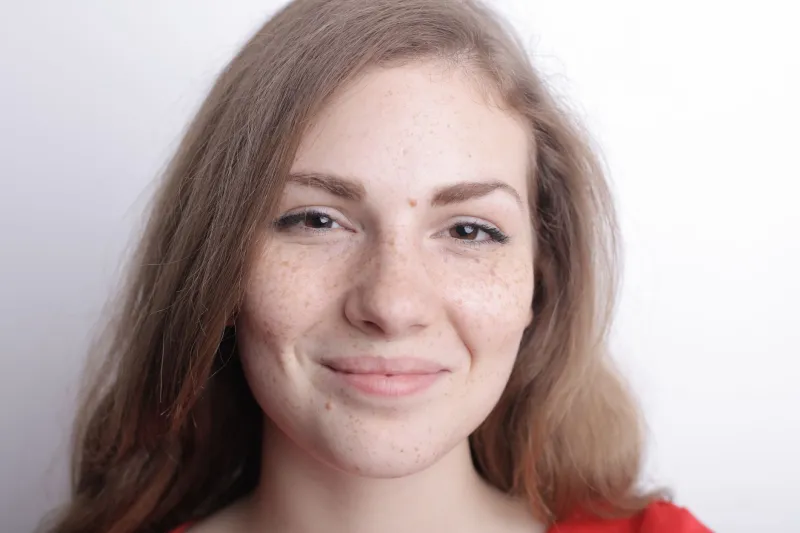
Distinctive features are the ones that make someone's face readable from across a room. A constellation of freckles across the nose bridge. A deep cupid's bow. Eyes set wide apart, or a jaw that carries real presence. A beauty mark that anchors the whole face.
These aren't flaws that slipped through the editing process. They're the editing process — the way genetics and time and environment have collaborated to make your face yours and not anyone else's.
Dermatologists and estheticians have long known that chasing uniformity in skin is often a losing game. Skin has texture. It has variation. Attempting to erase every visible marker with heavy coverage or aggressive treatments can actually compromise skin health, disrupt the barrier, and — ironically — make skin look less vibrant over time.
The cleanest, most radiant skin tends to be skin that's been supported rather than suppressed.
The Cultural Shift Happening Right Now
Look at who's leading beauty conversations in the US right now. The faces getting attention aren't the most conventionally "perfect" ones — they're the most interesting ones. Models with vitiligo booking major campaigns. Actresses refusing to CGI out their laugh lines. Influencers going makeup-free not as a statement but as a preference.
Brands are noticing. Casting has gotten more genuinely diverse — not just in ethnicity and body type, but in facial features. There's real appetite for faces that look like they've lived in them.
This isn't just a feel-good trend. It's a market signal. Consumers are increasingly skeptical of beauty imagery that looks too polished. Authenticity has become a purchasing driver, and brands that show real skin — texture, variation, and all — are building trust faster than those still reaching for the retouching tool.
Leaning In: A Practical Reframe
So what does it actually look like to treat your distinctive features as assets rather than problems to solve?
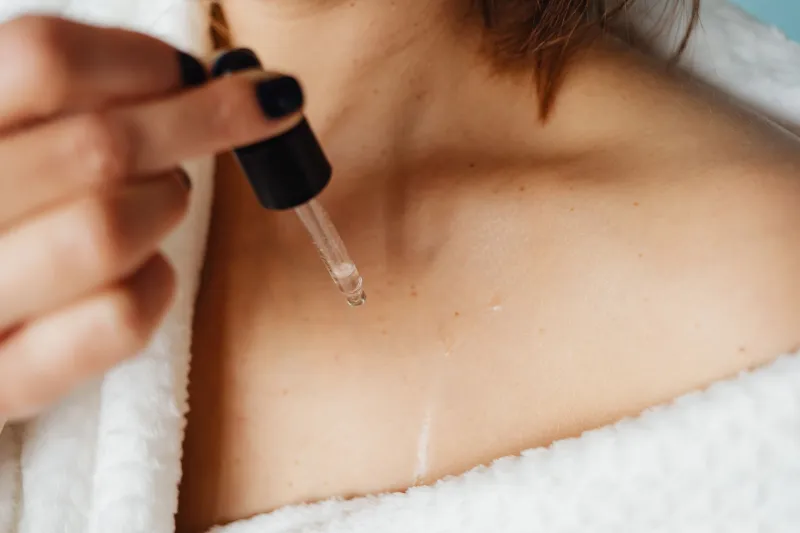
Skincare that supports, not suppresses. Instead of heavy coverage that obscures your natural features, focus on skincare that makes your skin genuinely healthy — well-hydrated, barrier-strong, and even in tone without being uniform in texture. Freckles on clear, glowing skin look intentional. Freckles under three layers of full-coverage foundation look like something you're hiding.
Makeup that highlights rather than erases. A birthmark near the lip doesn't need concealer — it might need a lip color that draws the eye and makes the whole composition work harder. A strong brow doesn't need to be thinned; it might need a brow gel that keeps it defined and intentional. Work with the feature, not around it.
Language matters too. The way you describe your own face shapes how you care for it. Calling your freckles "sun damage" is different from calling them part of your skin's story. One framing leads to corrective products and anxiety; the other leads to protective SPF and appreciation.
The Giraffe Principle, Applied
Here's the thing about iconic patterns: they only work because they're consistent. Sophie La Girafe's spots aren't random noise — they're a reliable, repeating signature that makes her immediately identifiable. Your distinctive features work the same way.
When you consistently show up with your actual face — the one with the specific eye shape and the particular placement of freckles and the smile that does that one thing — you become recognizable. And recognizable, in beauty culture and in life, is far more powerful than perfect.
The goal was never to look like everyone. It was always to look unmistakably like you.
That's not a consolation prize. That's the whole point.