Don't Get Played: How to Spot Greenwashing Before It Empties Your Wallet
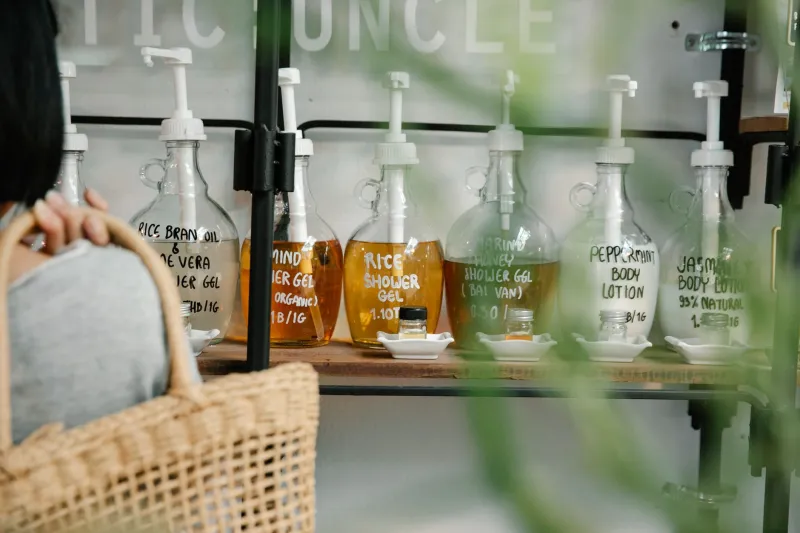
Picture this: you're standing in the skincare aisle, holding a moisturizer wrapped in kraft paper with a leafy logo and the word "clean" stamped across the front in a tasteful sans-serif font. It feels good. It looks responsible. But here's the uncomfortable truth — that product might be doing just as much damage to the environment as the neon-labeled drugstore brand sitting two shelves down.
Greenwashing — the practice of making misleading or unsubstantiated environmental claims — has become one of the beauty industry's dirtiest little secrets. And as conscious consumers, we deserve better than marketing theater.
At Sophie La Girafe Cosmetics, we built our brand on the belief that transparency isn't a trend — it's a baseline. So let's pull back the curtain.
The Problem With "Natural" (And Why It Means Almost Nothing)
Here's something that might surprise you: in the United States, the word "natural" on a cosmetic product is essentially unregulated. The FDA does not define or restrict the use of the term "natural" in beauty and personal care labeling. That means any brand can slap it on a product that contains synthetic preservatives, petroleum derivatives, or heavily processed ingredients — and face zero legal consequences for doing so.
The same goes for "clean," "green," "eco-friendly," and "non-toxic." These words carry enormous emotional weight with consumers, but without standardized definitions, they're little more than vibes dressed up as values.
A 2021 study from the Environmental Working Group found that over 70% of products marketed as "natural" still contained ingredients flagged for potential health or environmental concerns. That's not a small rounding error. That's a systemic problem.
Certifications: The Good, The Shady, and The Outright Fake
Not all certifications are created equal, and this is where it gets complicated. Some third-party seals actually mean something — others exist primarily to give brands a marketing edge without requiring meaningful accountability.
Certifications worth trusting:
- USDA Certified Organic — Rigorous, government-backed standards with real teeth.
- COSMOS Organic or COSMOS Natural — A globally recognized European standard increasingly adopted by US brands, with strict ingredient and manufacturing requirements.
- Leaping Bunny — The gold standard for cruelty-free, requiring supply chain audits rather than just brand-level pledges.
- B Corp Certification — Evaluates environmental and social performance across the entire business, not just the product formula.
Certifications to approach skeptically:
- Vague in-house badges like "Our Clean Promise" or "Eco Verified by [Brand Name]" with no external auditor.
- Certifications from organizations you've never heard of and can't verify online.
- "Dermatologist tested" — this phrase has no standardized meaning and requires no specific number of dermatologists or testing protocols.
When in doubt, Google the certifying body directly. A legitimate organization will have a publicly available list of certified brands and clear criteria for certification.
The Packaging Problem Nobody Wants to Talk About
A brand can formulate the most pristine, responsibly sourced serum on earth — and then ship it in a pump bottle made of multi-layer plastic that can never be recycled. This is one of the most common and least-discussed forms of greenwashing in beauty.
Brands love to highlight that their outer box is made from recycled cardboard. What they don't always tell you: the actual product container inside is made from plastic resin codes #3, #6, or #7 — types that most US municipal recycling programs simply don't accept.
Look for brands that:
- Clearly state the resin type of their packaging on the product or website
- Partner with established take-back programs like TerraCycle or offer their own verified return-and-refill system
- Use genuinely recyclable materials like glass, aluminum, or #1 and #2 plastics for primary packaging
- Publish annual sustainability reports with actual data, not just aspirational language
At Sophie La Girafe Cosmetics, we believe packaging transparency should be non-negotiable. If a brand can't tell you exactly what their bottles are made of and where they'll end up, that's a red flag.
Ingredient Sourcing: The Missing Chapter
Even when a formula is technically "clean," the supply chain behind it can be anything but. Palm oil derivatives appear in thousands of beauty products under dozens of different names — and irresponsible palm sourcing is one of the leading drivers of deforestation in Southeast Asia. Similarly, mica — the mineral that gives highlighters and eyeshadows their signature shimmer — has been linked to child labor in mining operations in India and Madagascar.
Progressive brands are addressing this by:
- Sourcing mica exclusively from verified, audited mines (look for Responsible Mica Initiative membership)
- Using RSPO-certified sustainable palm or opting for palm-free formulations entirely
- Publishing supplier lists or participating in open-source ingredient transparency platforms
If a brand's "About" page is full of beautiful photography and vague references to "ethically sourced botanicals" but offers zero specifics about their supply chain, keep scrolling.
Your Practical Checklist: Is This Brand Actually Sustainable?
Before you add to cart, run through these questions:
- Does the brand hold a recognized third-party certification (USDA Organic, COSMOS, B Corp, Leaping Bunny)?
- Can you find their full ingredient list and an explanation of each ingredient's sourcing?
- Is their packaging made from genuinely recyclable or refillable materials?
- Do they publish a sustainability report with measurable goals and progress updates?
- Are their social and environmental claims backed by external audits, not just internal promises?
- Do they disclose their carbon footprint or offset strategy?
- Is their cruelty-free claim verified by Leaping Bunny (not just a self-declared badge)?
- Can you find independent reviews or investigative coverage that corroborates their claims?
If a brand checks fewer than five of these boxes, you're likely paying a premium for a story — not for genuine sustainability.
The Bottom Line
Conscious beauty shouldn't require a PhD to navigate. But until the US catches up with tighter regulations around cosmetic labeling — and advocacy groups are actively pushing for exactly that — the burden of scrutiny falls on us, the consumers.
The good news? Every time we demand transparency, every time we email a brand asking for their packaging breakdown or their mica sourcing policy, we move the needle. Brands respond to pressure. They respond to lost sales. And they respond to a customer base that refuses to be dazzled by a pretty leaf logo.
At Sophie La Girafe Cosmetics, we're committed to being a brand you can actually interrogate — because we think that's what real clean beauty looks like. Not just good intentions. Receipts.
Stay curious. Stay skeptical. And keep asking the questions that matter.