Real Skin Is Having Its Moment — And Gen Z Is Leading the Charge
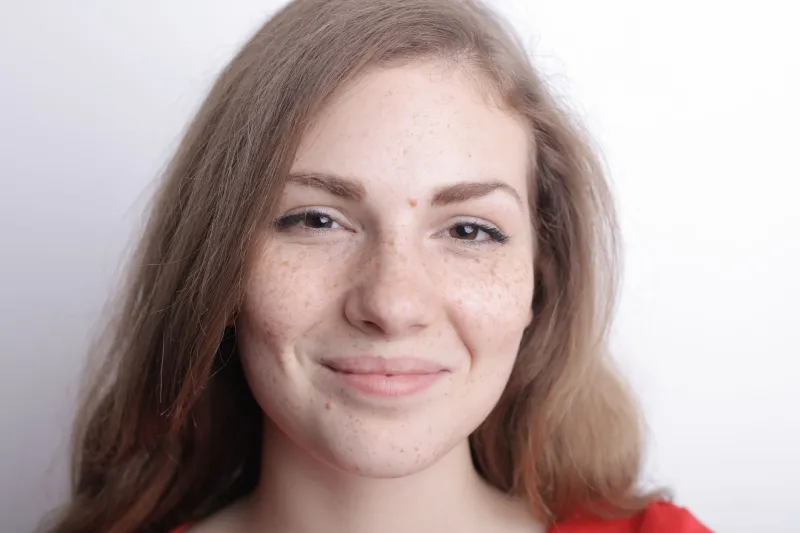
Scroll through TikTok for about four minutes and something starts to feel different. You'll see someone demonstrating a skincare routine — but instead of the poreless, airbrushed complexion we've been conditioned to expect, you're looking at a real face. Pores visible. A couple of breakout spots. Freckles doing exactly what freckles do. And the comments? Full of people saying, finally.
Something is shifting in the beauty landscape, and it's moving fast. The generation that grew up with Instagram's hyper-curated perfection has done a collective 180 — and they're bringing their skin texture, their hyperpigmentation, and their laugh lines along for the ride.
This isn't just a vibe shift. It's a full-on cultural reckoning with what beauty is supposed to look like — and it's reshaping everything from how products are formulated to how brands talk to their customers.
The Filter Fatigue Is Real
Let's be honest about where we've been. For most of the 2010s, the dominant beauty aesthetic online was essentially not human. Skin was smoothed into a matte, pore-free surface. Lips were overlined. Contour was architectural. And the tools to achieve that look — both the makeup and the editing apps — were everywhere.
The result? A generation of young people comparing their real faces to images that no real face could ever match. Research published in the journal Body Image found that exposure to heavily filtered social media content was strongly associated with increased appearance dissatisfaction among young women in the US. No surprise there.
But something cracked open around 2020. Maybe it was the pandemic forcing everyone onto video calls with terrible lighting and zero time for full-glam. Maybe it was a broader cultural conversation about authenticity. Maybe it was just collective exhaustion. Whatever the catalyst, Gen Z started posting their real skin — and finding out that people actually liked it.
"I Posted a No-Filter Selfie and My DMs Were Full for a Week"
That's what 24-year-old beauty creator Maya Delacroix told us when we asked about her experience embracing skin positivity online. Based in Austin, Texas, Maya has been creating content about clean beauty for three years. When she shifted away from filtered content, she expected backlash. What she got instead surprised her.
"People kept saying 'your skin looks so alive,'" she recalls. "Like, that word — alive. I never thought of my skin as alive when I was trying to make it look perfect. It just looked plastic."
Maya's experience is far from unique. Across platforms, creators who show their real skin — texture, redness, under-eye circles and all — consistently report higher engagement and more meaningful connection with their audiences than they ever got from polished, filtered content.
"Gen Z has a finely tuned radar for inauthenticity," says Dr. Priya Nair, a board-certified dermatologist based in New York City who frequently consults with beauty brands on product development. "They've grown up being marketed to so relentlessly that they can spot a performance from a mile away. When a brand or creator shows up with real skin, it registers as trustworthy in a way that perfection simply doesn't anymore."
What Skin Positivity Actually Looks Like in Practice
The movement — if we can call it that — centers on a few core ideas. First, that skin texture is normal. Everyone has pores. Skin has movement and dimension and doesn't look the same in every light. Second, that features like freckles, birthmarks, vitiligo patches, and hyperpigmentation are not flaws to be corrected but characteristics to be celebrated. And third, that a skincare routine should be about health and feeling good — not about erasing every trace of a lived-in face.
For Sophie La Girafe Cosmetics customer Jada Okonkwo, 22, from Atlanta, this shift has been genuinely life-changing. "I spent so much money on products trying to get rid of my freckles," she told us. "Now I'm literally buying products that enhance them. That's wild to me. But it feels so much better."
Jada now gravitates toward sheer, skin-loving formulas — tinted moisturizers that let her natural coloring show through, luminous serums that give her skin a healthy glow without masking it. "I want people to see my skin, just... glowing. Not a mask."
How This Is Changing What Brands Actually Make
Here's where things get really interesting from a product development standpoint. The skin positivity trend isn't just influencing marketing — it's changing formulas.
Dr. Nair has noticed a marked shift in what beauty brands are asking for in consultations. "Three years ago, everything was about coverage, blur, mattifying. Now I'm getting briefs about 'skin-like finish,' 'breathable wear,' 'second-skin texture.' The language has completely changed."
The market data backs this up. According to a 2023 report from Mintel, sales of tinted moisturizers and skin tints in the US grew by 34% year-over-year, while full-coverage foundations saw a decline. Sheer, buildable, skin-forward formulas are winning.
For clean beauty brands especially, this is a natural fit. Products that prioritize skin health over cosmetic coverage — think barrier-supporting serums, hydrating SPFs, and botanical-rich face oils — align perfectly with what skin-positive consumers are reaching for. The goal isn't to change your face. It's to take care of it.
"The cleanest thing you can do for your skin is stop fighting it," says Dr. Nair. "When you work with your skin's natural biology instead of trying to override it, you usually end up with better results anyway."
Freckles, Texture, and the New Language of Beauty
One of the most visually striking aspects of this trend is the reclamation of features that beauty culture spent decades teaching people to hide. Freckles — once targeted by entire product categories dedicated to "brightening" and "evening skin tone" — are now being enhanced with freckle pens and celebrated in campaigns.
Skin texture, the bête noire of Instagram-era beauty, is now something creators zoom in on rather than smooth out. The hashtag #skintexture has hundreds of millions of views on TikTok, with creators showing their pores, bumps, and surface variation as proof of authenticity rather than imperfection.
"I think people are just tired of being told their face is a problem to be solved," says Maya. "Like, I'm 24. I don't have 'aging concerns.' I have a face. And it's fine."
What This Means for You
If you're a conscious beauty consumer, this shift is genuinely good news. It means the products being developed right now are increasingly focused on skin health rather than skin concealment. It means marketing is (slowly, imperfectly) starting to show real people. And it means you have more permission than ever to show up as you actually are.
At Sophie La Girafe Cosmetics, we've always believed that the best version of your skin is your actual skin — nourished, protected, and celebrated. Not corrected. Not filtered. Not erased.
So if you've been thinking about ditching the heavy foundation, or finally embracing those freckles you spent years trying to fade — consider this your sign. Real skin is in. And honestly? It always looked better anyway.