Cream Over Powder: A Five-Minute Winter Face for Skin That's Over It
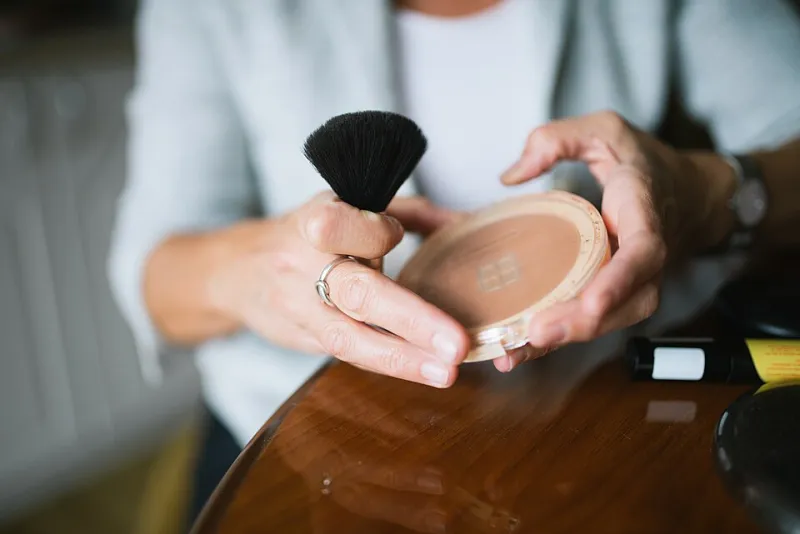
Photo: Shixart1985, CC BY 2.0, via Wikimedia Commons
There's a specific morning in late November when your usual base suddenly betrays you. It goes on fine, then within an hour it's clinging to the dry patch next to your nose and pooling in the smile lines you swear weren't there in September.
That's not a bad foundation. That's winter.
Cold outdoor air holds less moisture, indoor heating pulls more out of your skin, and transepidermal water loss climbs. Powder loves a dry patch. Mattifying anything loves a dry patch. So the entire strategy for cold-weather makeup is: add slip, subtract powder, use your fingers.
Here's the five-minute face, five products, cream formulas only.
Minute zero: prep like it's the actual makeup step
This is the part everyone skips and then blames the foundation for.
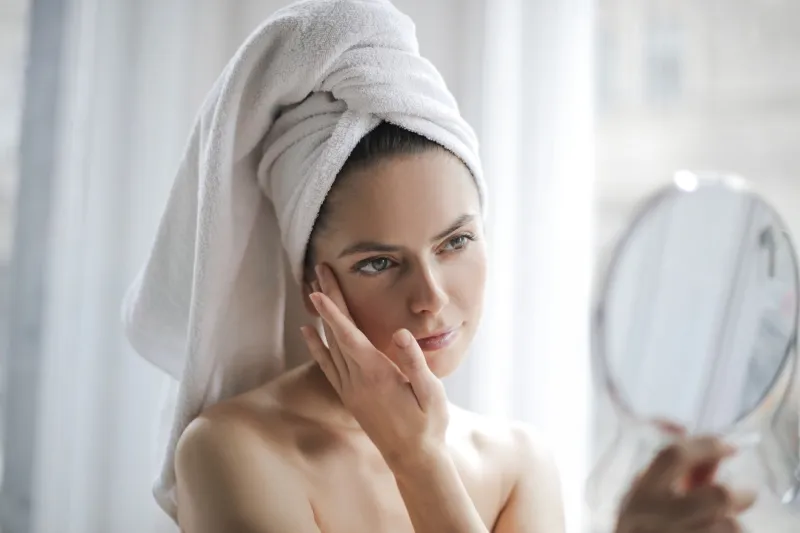
Apply a barrier-friendly moisturizer — look for ceramides, glycerin, squalane, panthenol — onto skin that's still slightly damp from cleansing. Then wait. Sixty to ninety seconds. Not because of a rule, but because cream makeup applied over wet moisturizer will slide, and applied over fully dried-down skin will grip the dry patches.
If your skin is flaring, skip the morning acid toner and the vitamin C. Save the actives for night until the humidity comes back.
The five products
- A tinted moisturizer or skin tint — cream or gel-cream, never a matte finish
- A cream concealer, one shade that actually matches
- A cream blush (or a cream bronzer, if that's more your thing)
- A cream shadow stick, ideally in a neutral taupe or bronze
- A tinted balm or sheer lipstick
That's the list. No powder foundation, no setting spray, no loose powder as a personality trait. If you have a favorite mascara, add it as a bonus — that's a sixth product and I'm not going to pretend otherwise.
1. Skin tint: fingers, press, don't swipe
Warm a small amount between your fingertips and press it into the center of your face first — nose, cheeks, chin — then blend outward with whatever's left on your hands. The perimeter of your face rarely needs a full coat, and leaving it lighter is what makes base look like skin rather than a mask.
One thin layer. If you think you need a second, you probably need concealer instead.
2. Concealer: dots, not stripes
Three tiny dots under each eye, one on any active blemish, one at the base of each nostril where redness collects. Tap with a finger — the warmth helps it melt into the tint underneath. Don't set it with powder unless it actually creases on you, and even then, use the lightest dusting possible with a small fluffy brush.
If you have mature or very dry under-eyes, thin layers beat full coverage every single time. Heavy concealer over crepey texture is what makes it read as crepey.
3. Cream blush: high on the cheek, then up and out
Tap a small amount onto the upper cheekbone and blend upward toward the temple, not downward. Downward blending drags the whole face with it. Use your ring finger for the softest pressure.
Whatever's left on your fingertip goes on your eyelids. Yes, really. It's the fastest way to make the whole face feel intentional.
4. Eyes: one stick, two jobs
Draw a thin line of the cream shadow stick along the upper lash line, then smudge it with your pinky before it sets. Then sweep a wash of the same shade across the lid — a single pass, blended at the crease with a finger.
Cream shadow on dry lids will crease by 3 p.m. That's the tradeoff. If it bothers you, tap a whisper of translucent powder just on the lid and nowhere else. Brows: a clear or tinted brow gel, or the same shadow stick brushed through with a spoolie if your brows are dark.
5. Lips: balm first, color second
A layer of plain balm, then a tinted lip color tapped on top with your finger for a blurred, lived-in edge. Straight bullet lipstick on chapped lips will find every flake. Balm underneath prevents the worst of it.
Where powder still earns its place
Exactly one spot: the T-zone, if you're genuinely oily there, applied with a small brush and a light hand. Never over dry patches. Never under the eyes if you're prone to creasing. Never as a final all-over step in January. The goal is a face that reflects a little light, not one that absorbs it.
Clean formula notes worth a glance
Cream products lean on oils and butters for their texture, which is great for dryness and less great for congestion — if you're acne-prone, patch test anything heavy in coconut-derived ingredients before committing to a full face of it. And check the back label for fragrance, since cream formulas love a botanical scent and reactive skin in winter is reactive skin. Unscented isn't the same as fragrance-free, and "natural aroma" is still aroma.
The five-minute clock
- 0:00–1:30 — moisturizer, then wait it out
- 1:30–2:30 — skin tint, pressed in
- 2:30–3:30 — concealer and blush
- 3:30–4:15 — eyes and brows
- 4:15–5:00 — lips, hair, coat, out the door
That night, take it off properly
Cream formulas are stubborn. A cream cleanser plus a soft microfiber cloth, or a cleansing balm followed by your regular gel cleanser, will get it all off without stripping the barrier you just spent the morning protecting. Leave the residue on overnight and you'll be back here tomorrow, wondering why your foundation is caking.