The Beauty Cabinet Audit: A Practical Guide to Cutting Waste and Getting Clearer Skin
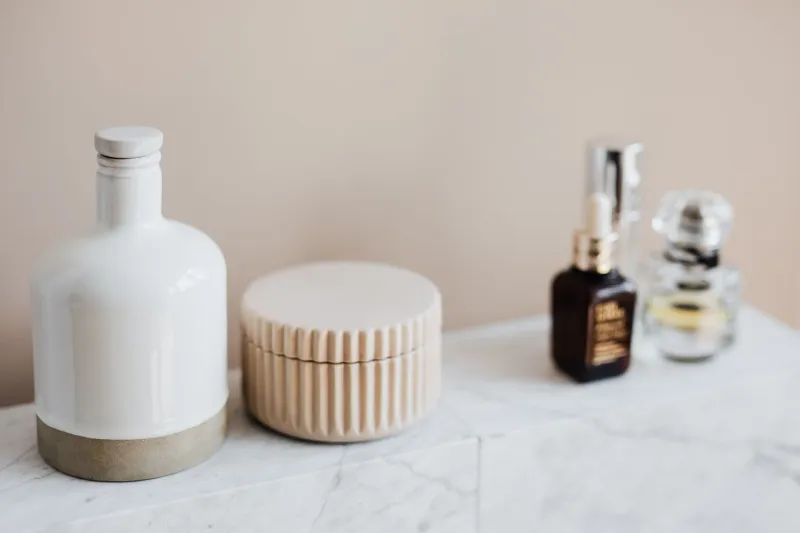
Open your bathroom cabinet right now. Not mentally — actually open it.
If you're like most people, what you'll find is a mix of products you love, products you forgot you owned, products you bought after a convincing ad and used twice, and at least one serum you're keeping because it was expensive and you feel guilty about not finishing it.
That cabinet isn't just clutter. It's a record of every beauty trend you got swept up in, every "holy grail" that didn't quite deliver, and every well-intentioned purchase that never made it into your actual routine. And it might be doing more harm than good.
Why Your Cabinet Is Probably Working Against You
Here's something the beauty industry doesn't love to advertise: more products don't equal better skin. In fact, dermatologists consistently find that product overload is one of the most common causes of irritation, breakouts, and barrier disruption they see in practice.
When you're cycling through multiple serums, layering actives without a clear system, and reaching for different products based on whatever you feel like that day, your skin never gets a chance to stabilize. You can't tell what's working. You can't tell what's causing a reaction. Your routine becomes noise instead of signal.
Beyond skin health, there's an environmental cost that's easy to overlook. The beauty industry generates an estimated 120 billion units of packaging annually in the US alone, and a significant portion of that waste comes from products that were opened, used a handful of times, and discarded. Conscious consumption has to include an honest look at what we're actually using — not just what we're buying.
How to Run a Real Audit (Not Just a Declutter)
The difference between an audit and a declutter is intention. Decluttering asks: do I want to keep this? An audit asks: is this serving me, and if not, why did I buy it in the first place?
Step one: Pull everything out. All of it. Every product from every drawer, shelf, and travel bag. Seeing it all together is usually the most clarifying moment of the whole process — and often the most uncomfortable one.
Step two: Check dates and integrity. Most skincare products have a PAO (period after opening) symbol — the little open jar icon with a number inside. That number tells you how many months the product is good for after opening. Vitamin C oxidizes. Retinoids degrade. SPF loses efficacy. Products past their PAO aren't just ineffective; some can actively irritate skin. Be honest here and toss what's expired.
Step three: Sort into categories. Create three piles: actively using and it works, have used but not sure if it's doing anything, and haven't used in over a month. That third pile is your starting point for what to let go.
Step four: Identify overlap. How many moisturizers do you own? How many products contain niacinamide? How many serums are targeting the same concern? Overlap isn't always bad — but when you're using multiple products with the same active ingredient, you risk overdoing it without realizing.
Step five: Ask the hard question. For every product in the "not sure" pile, ask yourself: if I ran out of this tomorrow, would I repurchase it? If the answer isn't a clear yes, that's your answer.
What to Do With What You're Letting Go
Before you throw everything in the trash, consider your options. Unopened, unexpired products can be donated to local shelters or organizations like Beauty Bus Foundation, which provides personal care support to people with chronic illness. Some brands have take-back programs for empty containers. TerraCycle partners with several beauty companies on recycling initiatives worth looking into.
Products that are expired or compromised should be disposed of properly — check your local guidelines for cosmetic waste, since some formulas shouldn't go down the drain.
Building Back Smarter
Once you've cleared out what isn't working, resist the urge to immediately fill the space. This is the moment where conscious consumption actually happens — not in the buying, but in the pause before buying.
A well-functioning skincare routine for most people involves a cleanser, a moisturizer, an SPF, and one or two targeted treatments. That's it. Everything beyond that should earn its place by addressing a specific, observable concern — not because it was on sale or because a review made it sound miraculous.
When you do add something new, introduce it one product at a time, spaced at least two weeks apart. This isn't just good practice for identifying reactions — it also forces intentionality. You can't impulse-buy your way through a routine when you're actually paying attention to how your skin responds.
The Cleaner Cabinet, The Cleaner Conscience
There's something genuinely freeing about a bathroom shelf that only holds things you actually use. It's easier to get ready. It's easier to track what's working. And it's easier to make purchasing decisions that align with your values when you're not surrounded by evidence of past impulses.
Clean beauty was never just about ingredients. It's about the whole relationship you have with the products you bring into your home and onto your skin. An audit is one of the most honest ways to examine that relationship — and one of the most effective ways to change it.