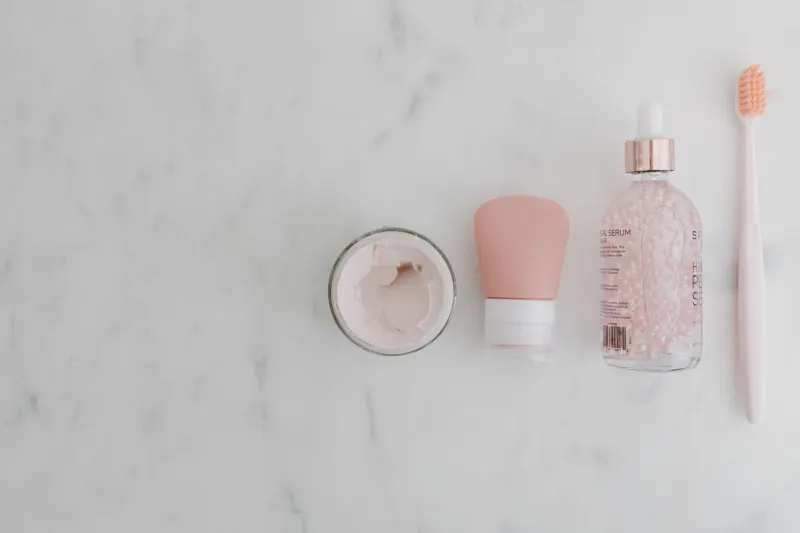
Rest, Reset, Repeat: The Surprising Science of Giving Your Skin a Break
There's a reason Sophie La Girafe's iconic giraffe pattern works so well. Those dark patches aren't random—they're separated by lighter pathways that give each section room to breathe, to function, to stand out on its own. It turns out your skin operates on a surprisingly similar principle. Give it constant, uninterrupted input, and it eventually stops listening. Introduce a little space? That's when things get interesting.
Dermatologists are increasingly talking about something the beauty industry has been slow to acknowledge: that perpetual product layering can actually dull your skin's ability to regulate itself. And the antidote isn't a new serum. It's intentional rest.
Your Skin Is Smarter Than Your Routine
Here's the thing most skincare marketing doesn't want you to know—your skin is already doing a lot. It produces its own lipids to maintain the barrier. It cycles through cell renewal every 28 to 40 days. It adjusts oil production based on environment, hormones, and stress. It's not a passive surface waiting to be fixed. It's a dynamic, self-regulating organ.
When you pile on active after active—retinoids, AHAs, vitamin C, peptides, niacinamide—without giving your skin time to recalibrate, you can inadvertently disrupt those natural processes. Scientists call this receptor downregulation. Basically, when a cell is exposed to the same stimulus over and over, it becomes desensitized. The signal gets weaker. The response diminishes. You're using the same products, spending the same money, and getting less and less back.
This is the biological case for what some dermatologists are now calling "skin fasting"—and it's more nuanced than just going bare-faced for a weekend.
What "Skin Fasting" Actually Means
The term sounds extreme, but in practice it's pretty approachable. Skin fasting doesn't mean abandoning SPF or throwing your moisturizer in the trash. It means deliberately rotating, pausing, or simplifying your routine in a structured way so your skin can re-establish its baseline.
There are a few different ways conscious consumers are doing this:
Ingredient cycling. Instead of using your retinol every single night, you rotate it in on three or four nights per week. Your skin gets the benefit without building tolerance or experiencing chronic irritation. Same concept applies to exfoliating acids.
Seasonal resets. Summer skin and winter skin are genuinely different. The products that kept your complexion balanced in July might be actively working against you in January. A seasonal transition period—where you strip back to basics for a week or two before introducing new formulas—gives your barrier time to adjust rather than throwing it into product whiplash.
The weekend simplicity window. Some dermatologists recommend keeping Saturday and Sunday routines minimal: a gentle cleanser, a basic moisturizer, and SPF if you're heading outside. No actives, no treatments. Just maintenance. This gives your skin two days out of every seven to do its own thing.
The Barrier Conversation We Need to Have
A lot of skin concerns that people bring to dermatologists—persistent redness, increased sensitivity, breakouts that seem to appear out of nowhere, a tight or uncomfortable feeling after cleansing—are actually signs of a compromised skin barrier. And one of the most common causes of barrier damage isn't genetics or pollution. It's over-exfoliation and ingredient overload.
When your barrier is struggling, it can't do its primary job: keeping moisture in and irritants out. So you reach for more products to address the dryness, the sensitivity, the breakouts. And the cycle continues.
A strategic pause breaks that cycle. When you simplify your routine for even a week or two, you give your skin the opportunity to rebuild its lipid layer, calm inflammation, and return to a functional baseline. From that reset point, reintroducing actives tends to yield noticeably better results—because your skin is actually able to receive and respond to them again.
Pattern Interruption as a Long-Term Strategy
Here's where the giraffe metaphor really lands. Those light pathways between the dark patches aren't empty space—they're connective tissue. They're what makes the whole pattern functional and beautiful. In the same way, the pauses in your skincare routine aren't gaps in your regimen. They're part of the strategy.
Conscious beauty consumers are increasingly moving away from the idea that more products equal better skin. The real flex is understanding your skin well enough to know when to push and when to pull back. That requires paying attention—noticing when your skin feels reactive versus resilient, when it's absorbing products well versus sitting on top of them, when your usual routine is working versus when it seems to be doing nothing at all.
Keeping a simple skin journal (even just a few notes on your phone) can make this easier. Track what you're using, how your skin feels, and any changes you notice. Over time, patterns emerge. You'll start to see that your skin actually thrives on rhythm and variation rather than rigid, unchanging protocol.
How to Build a Smarter Rotation
If you're ready to experiment with pattern interruption in your own routine, here's a low-pressure framework to start with:
Identify your actives. List out anything in your routine that's doing heavy lifting—retinol, AHAs, BHAs, vitamin C, strong peptides. These are the ingredients most likely to benefit from intentional rotation.
Choose one to cycle first. Don't overhaul everything at once. Pick one active and try using it three to four times per week instead of daily for a month. Notice if your skin responds differently.
Plan a two-week reset twice a year. At the change of seasons, strip back to your most basic routine. Cleanser, moisturizer, SPF. That's it. Let your skin recalibrate before you introduce any new or seasonal products.
Give yourself permission to do less. This is the part the beauty industry doesn't profit from, but your skin absolutely does. Some of the best skin days happen after a few days of doing almost nothing.
The Bigger Picture
Clean beauty and conscious living aren't just about what's in your products—they're about how you use them. Buying less, rotating smarter, and understanding your skin's actual needs rather than chasing every new launch is genuinely progressive beauty practice. It's also, not coincidentally, better for your wallet and the planet.
Your skin doesn't need to be in a constant state of intervention. Sometimes the most sophisticated thing you can do is step back, let it breathe, and trust that it knows what it's doing. The pause, it turns out, is part of the pattern.